


As a travel agency, you can distribute travel insurance to your clients entirely legally, without registering with ORIAS, provided you stay within the thresholds and meet the obligations set out by the Insurance Distribution Directive (IDD) and the French Tourism Code. The status of Ancillary Insurance Intermediary is designed precisely for travel professionals.
What the law requires of travel professionals
Article R211-4 of the French Tourism Code: the minimum baseline
Article R211-4 of the French Tourism Code requires every seller of travel or holiday packages to inform their clients, before any contract is signed, about the insurance available. Point 8 is explicit: professionals must communicate about “insurance covering repatriation in the event of accident, illness or death.” Repatriation cover is the non-negotiable legal floor, whatever package is being sold.
To understand the difference between repatriation insurance and standard health cover, see our article on the differences between travel insurance and health insurance.
The IDD: a directive that applies to you too
The Insurance Distribution Directive (EU Directive 2016/97), transposed into French law and applicable since 1 October 2018, governs any sale or proposal of an insurance product. It covers brokers, comparison platforms and secondary distributors, including travel agencies. The directive does not exclude you: it creates a dedicated status tailored to your operational reality.
Ancillary Insurance Intermediary status: the legal framework built for travel agencies
The IDD defines the status of Ancillary Insurance Intermediary. You are eligible if three conditions are met simultaneously:
- Insurance distribution is secondary to your core activity (selling travel);
- You only distribute insurance products that are complementary to a good or service you sell;
- The products do not cover life insurance or civil liability risks (unless that cover is strictly ancillary to the trip being sold).
By offering comprehensive travel insurance or a repatriation policy, you naturally meet all three criteria.
The thresholds to stay below to avoid ORIAS
Ancillary Insurance Intermediary status exempts you from ORIAS registration, subject to premium caps:
- €200 per person for any policy with a coverage period of three months or less;
- €600 per person on an annual basis for longer-term policies.
As long as your clients subscribe within these limits, you operate under a simplified framework. Exceed them and you enter the standard brokerage regime, with mandatory ORIAS registration and significantly heavier professional obligations.
Your concrete obligations as an Ancillary Insurance Intermediary
Even below the thresholds, obligations apply to every insurance sale:
- Provide your client with the identity and address of the intermediary, as well as complaints channels, from the quote stage onwards;
- Comply with the disclosure obligations set out in the French Insurance Code;
- Hand over the Insurance Product Information Document (IPID) before the policy is signed;
- State clearly that taking out insurance is independent and optional from the purchase of the trip.
How Yupwego lets you distribute compliantly
Yupwego is a wholesale broker that gives travel agencies a management platform built to comply fully with the IDD regulatory framework, covering both products and legal documentation. This partnership sits within a structured approach, strengthened in particular by the Yupwego and Verspieren partnership, which underpins the strength of the cover on offer.
As a partner agency, you act as distributor and can create policies for your clients, individuals or businesses, provided you obtain their consent on a tangible medium (email, signed form, etc.).
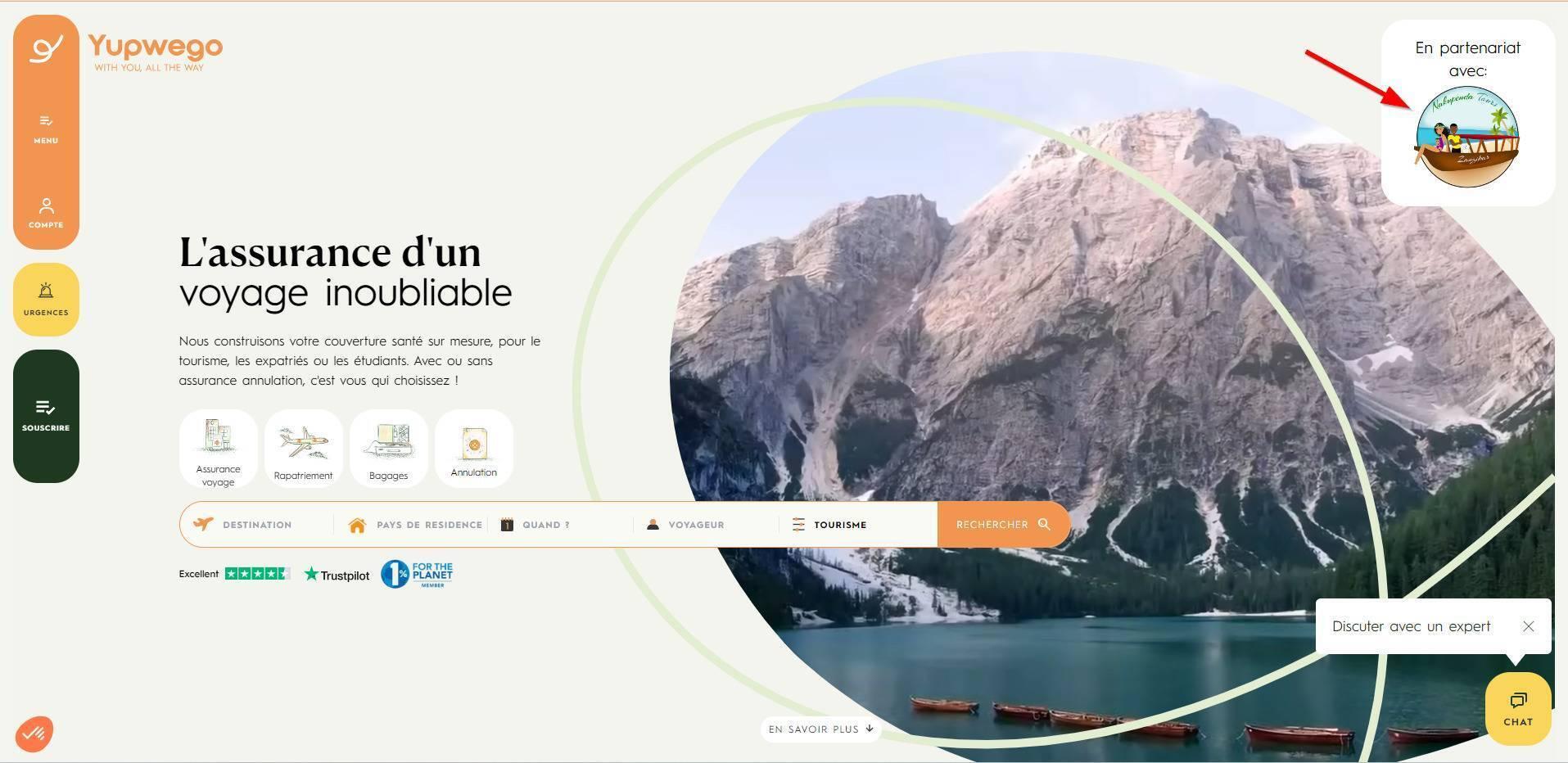
Your partner space: a co-branded portal
Access is via your email address and password on yupwego.com. Your identity is highlighted at every step of the client journey, with your logo alongside the label “In partnership with”:
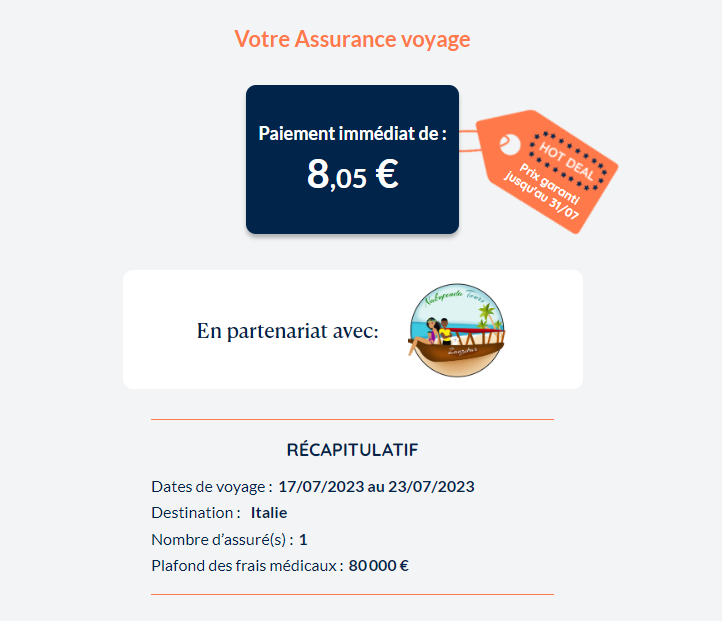
The subscription journey carries your branding at step 2:
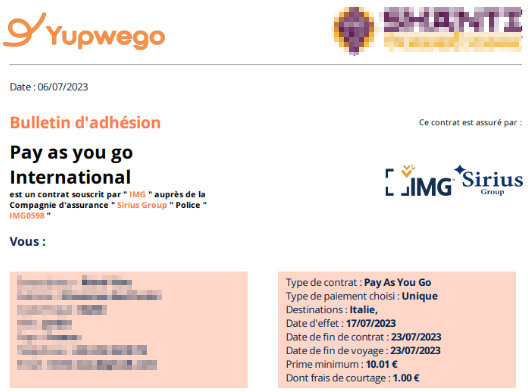
What you receive with every quote:
- The negotiated rate (based on a percentage uplift on public prices), which you can adjust to manage your conversion rate;
- The product information sheet (IPID) and General Conditions to hand to the client before subscription;
- An automatic confirmation email sent to the subscribing client, along with the Assistance Guide detailing the claims procedure.
For an idea of the price ranges on the market, see our guide on affordable travel insurance online.
Contract and commission tracking
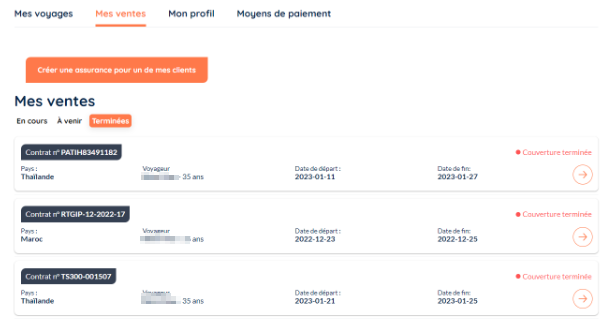
Find all your client policies in the “My Sales” tab:
Your commissions are available in the dedicated reporting section:
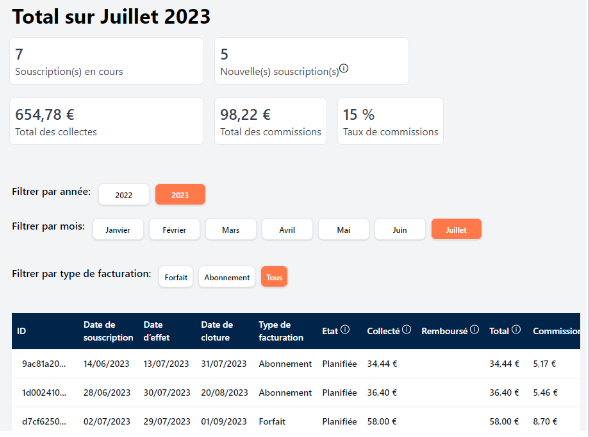
Invoicing is automated: an invoice is generated for each payment and can be downloaded directly from your client area.
Your obligations towards Yupwego
By joining the partner network, you agree to:
- Retain proof of consent for each client;
- Verify that payment has been completed before cover is activated;
- Notify Yupwego of any policy cancellation occurring before the effective date;
- Comply with the client withdrawal terms set out in the Yupwego contractual framework.
FAQ
What is the IDD and why does it apply to travel agencies?
The IDD (Insurance Distribution Directive, EU Directive 2016/97) governs any proposal or sale of an insurance product across Europe since 1 October 2018. Travel agencies fall under its scope the moment they offer cancellation insurance, comprehensive travel insurance or an assistance policy to their clients. The directive reserves a status suited to their core activity: Ancillary Insurance Intermediary.
Does a travel agency have to register with ORIAS?
Not necessarily. Below €200 per person for contracts of three months or less (or €600 per year for others), an agency operates as an Ancillary Insurance Intermediary and is exempt from ORIAS registration. Above these caps, it enters the standard brokerage regime, with mandatory registration and enhanced training requirements.
What is the minimum insurance a travel agent must offer when selling a trip?
Under Article R211-4 of the French Tourism Code, travel and holiday package sellers must at minimum inform clients about repatriation cover in the event of accident, illness or death. Repatriation cover is the legal floor that every travel seller must present to their clients.
What documents must I give my client before they take out travel insurance?
Before signing, you must provide: the Insurance Product Information Document (IPID), the policy’s General Conditions, your contact details, and the complaints channels. You must also state explicitly that taking out insurance is separate and optional from the purchase of the trip.
Can I create an insurance policy on behalf of a client through Yupwego?
Yes. The Yupwego platform allows a partner agency to create a policy for a subscriber other than their own account, provided they collect and retain the client’s consent on a tangible medium. The client then automatically receives their confirmation along with the Assistance Guide detailing the procedure in the event of a claim.