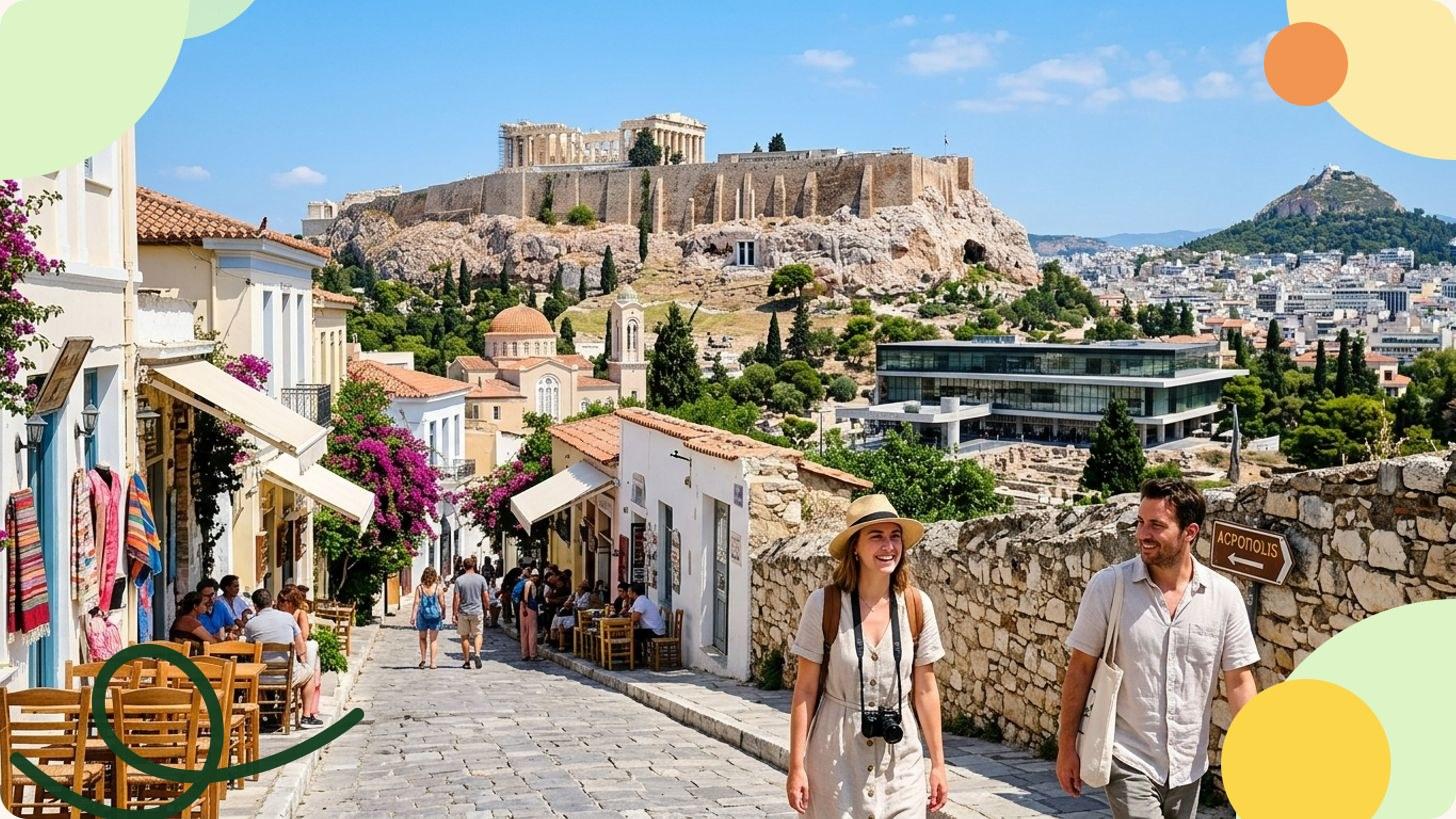

Athens packs twenty-five centuries of history, vibrant neighbourhoods and Mediterranean cuisine into just a few square kilometres. To see the essentials without rushing, allow at least two days: the Acropolis and its museum in the morning, Plaka and Monastiraki in the afternoon, and Lycabettus Hill at sunset.
Visiting the Acropolis and the Parthenon
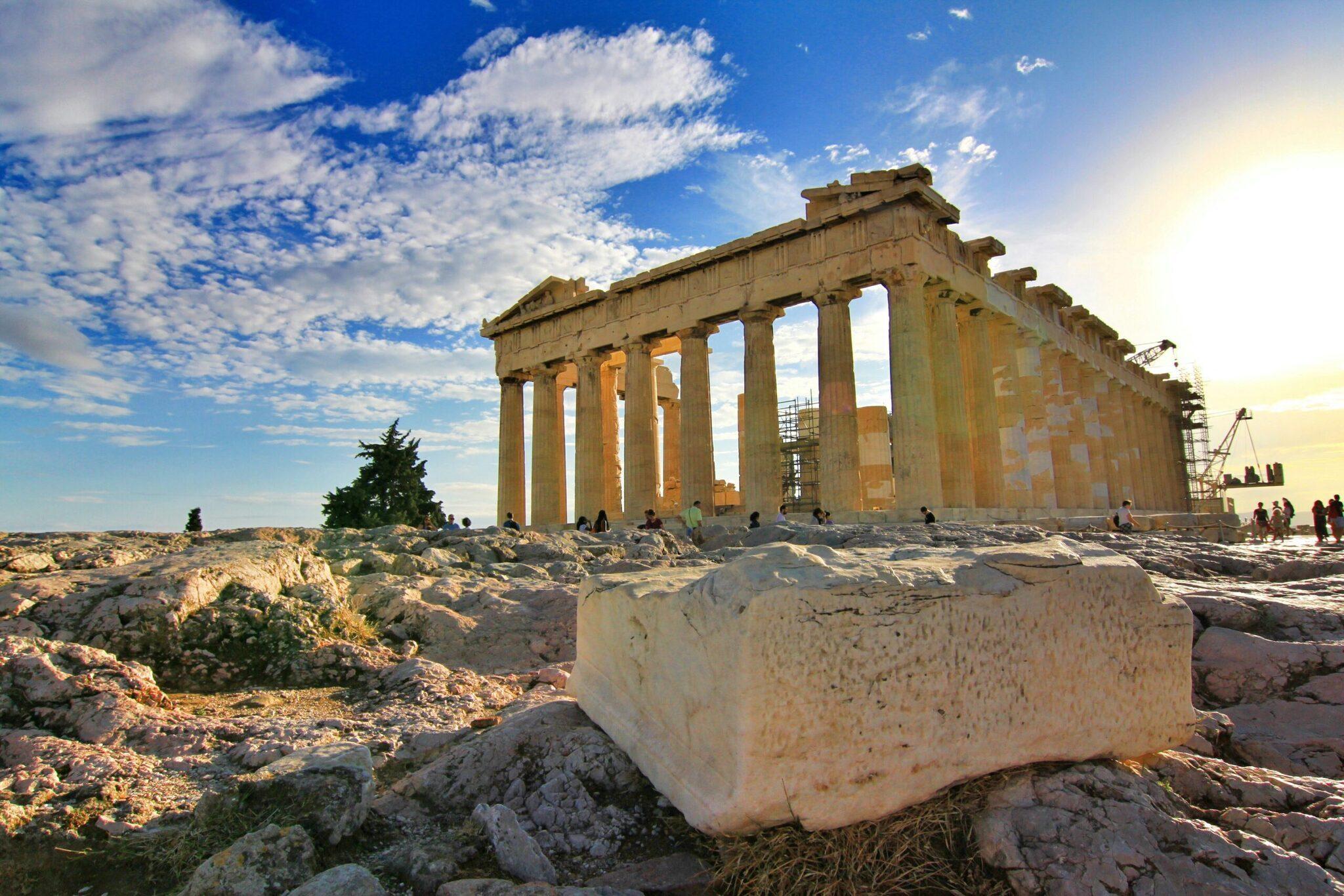
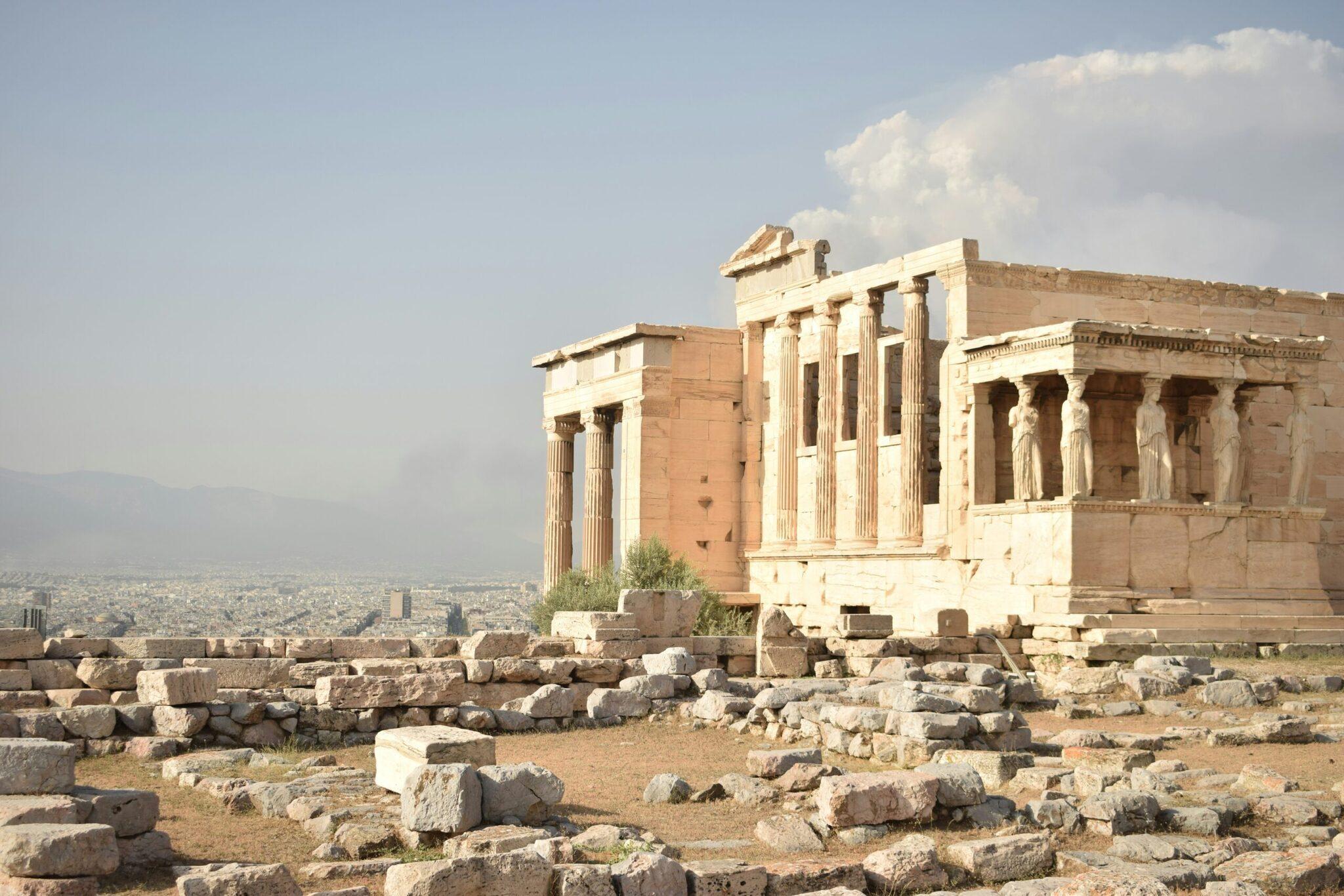
The Acropolis is the gravitational centre of any trip to Athens. From this sacred rock, the Parthenon has dominated the city since the 5th century BC. On the same site, the Erechtheion with its Caryatids and the Temple of Athena Nike complete the ensemble.
Arrive at opening time (8am) or in the late afternoon to beat the crowds and the heat. Since 1 April 2025, the full-price ticket is €30. EU nationals under 25 enter free on presentation of a valid ID. Combined tickets cover the Acropolis and several other Athens sites in one purchase (Ancient Agora, Roman Agora, Temple of Zeus, Aristotle’s Lyceum, Panathenaic Stadium). At the height of summer, if temperatures exceed 40°C, access may be suspended between 1pm and 5pm.
Exploring the Acropolis Museum
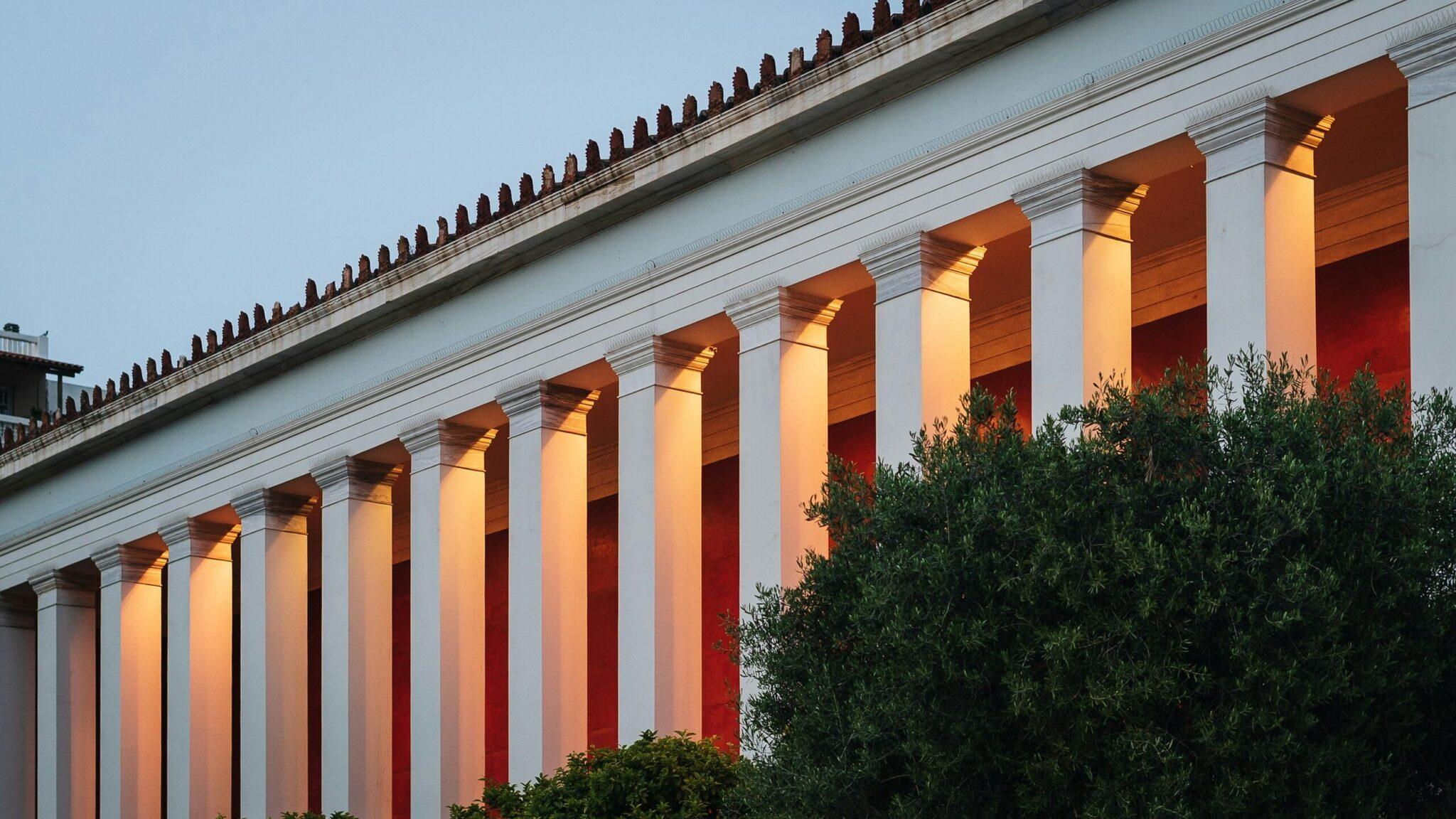
Just below the hill, the Acropolis Museum answers the obvious question: where are the original sculptures? Opened in 2009, this glass building displays the Parthenon frieze across more than 150 metres on the top floor, with the Acropolis itself visible through the floor-to-ceiling windows behind it. Four of the six original Caryatids from the Erechtheion are on display here; the fifth is in the British Museum, a long-standing source of diplomatic dispute.
Plaka and Monastiraki: Two Neighbourhoods, One Walk
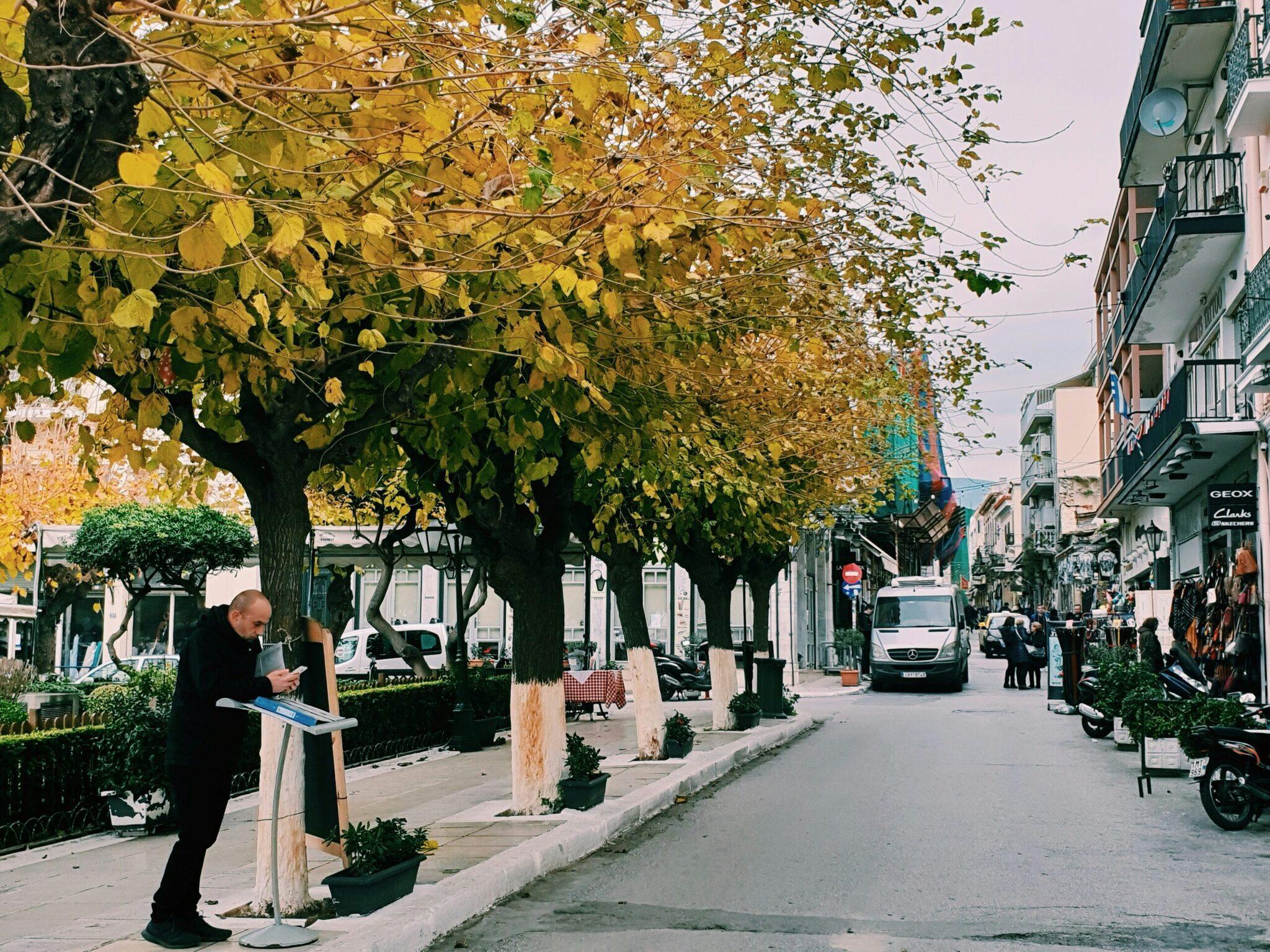
Plaka is the oldest continuously inhabited neighbourhood in Athens. Its cobbled lanes, colourful house fronts and plane trees offer a welcome breather between archaeological sites. The cafes on Mnisikleous Street, looking up at the Acropolis, are the perfect spot to recharge before pushing on.
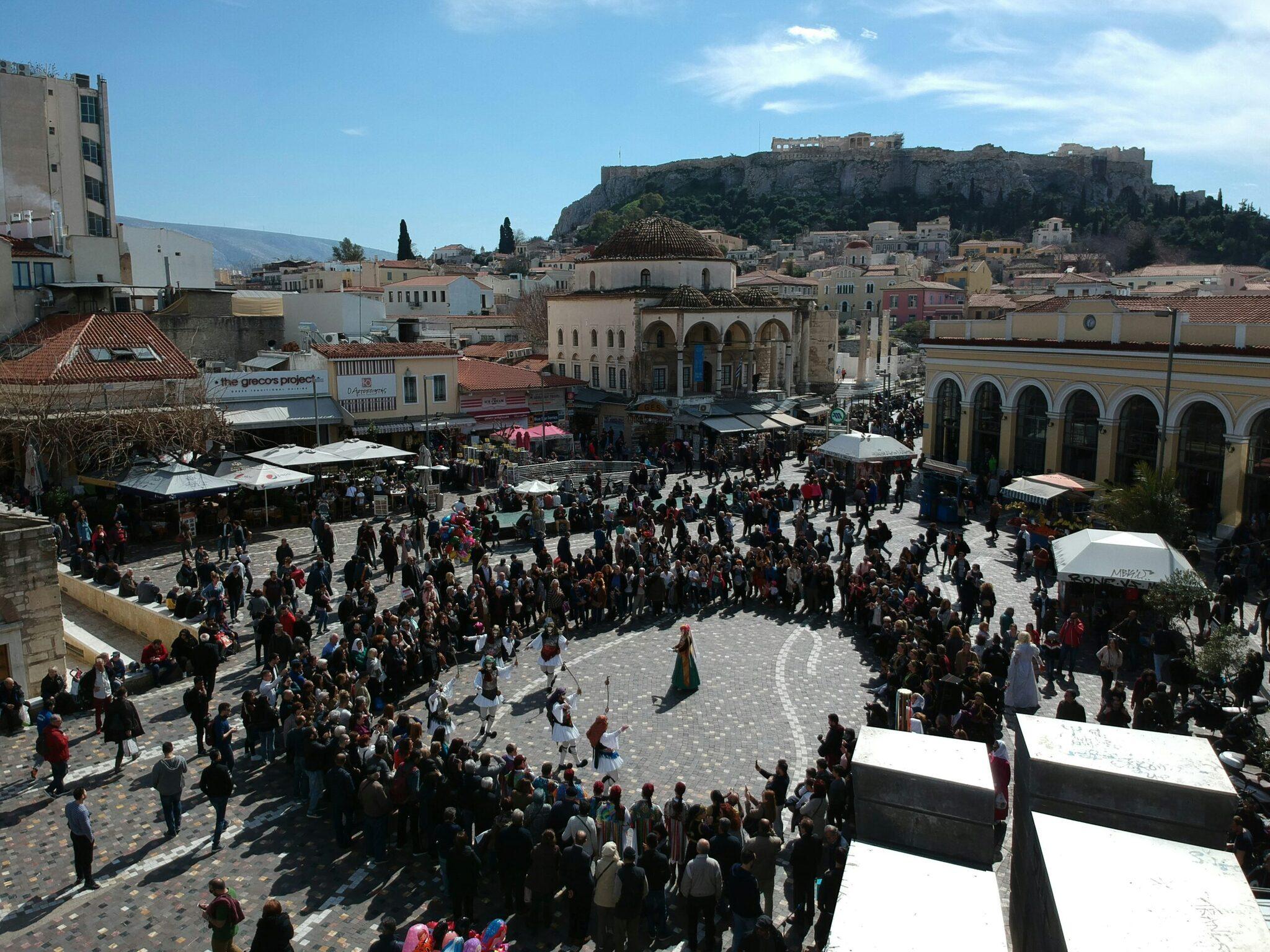
Ten minutes’ walk away, Monastiraki shifts the mood entirely: an Ottoman mosque, a Byzantine church, an archaeological site and a flea market all share the same central square. On Sunday mornings, the market spills into the surrounding lanes, with bric-a-brac, antiques and clothing stalls.
The Ancient Agora: Where Democracy Was Invented
The Ancient Agora is where Athenians once debated, voted and philosophised. The Temple of Hephaestus, which overlooks it, is one of the best-preserved Greek temples in the world. The on-site museum traces daily life in classical Athens with artefacts found nowhere else. The Ancient Agora is included in the Acropolis combined ticket.
Lycabettus Hill: A 360-Degree Panorama Over Athens
The highest point in the city, Lycabettus Hill rewards you with a 360-degree panorama over Athens, the Acropolis, Piraeus and, on a clear day, the islands of the Saronic Gulf. You can walk up from the Kolonaki neighbourhood or take the funicular, which runs daily from 9am to 1:30am. The Chapel of Saint George and a cafe-restaurant give you every reason to linger at the top.
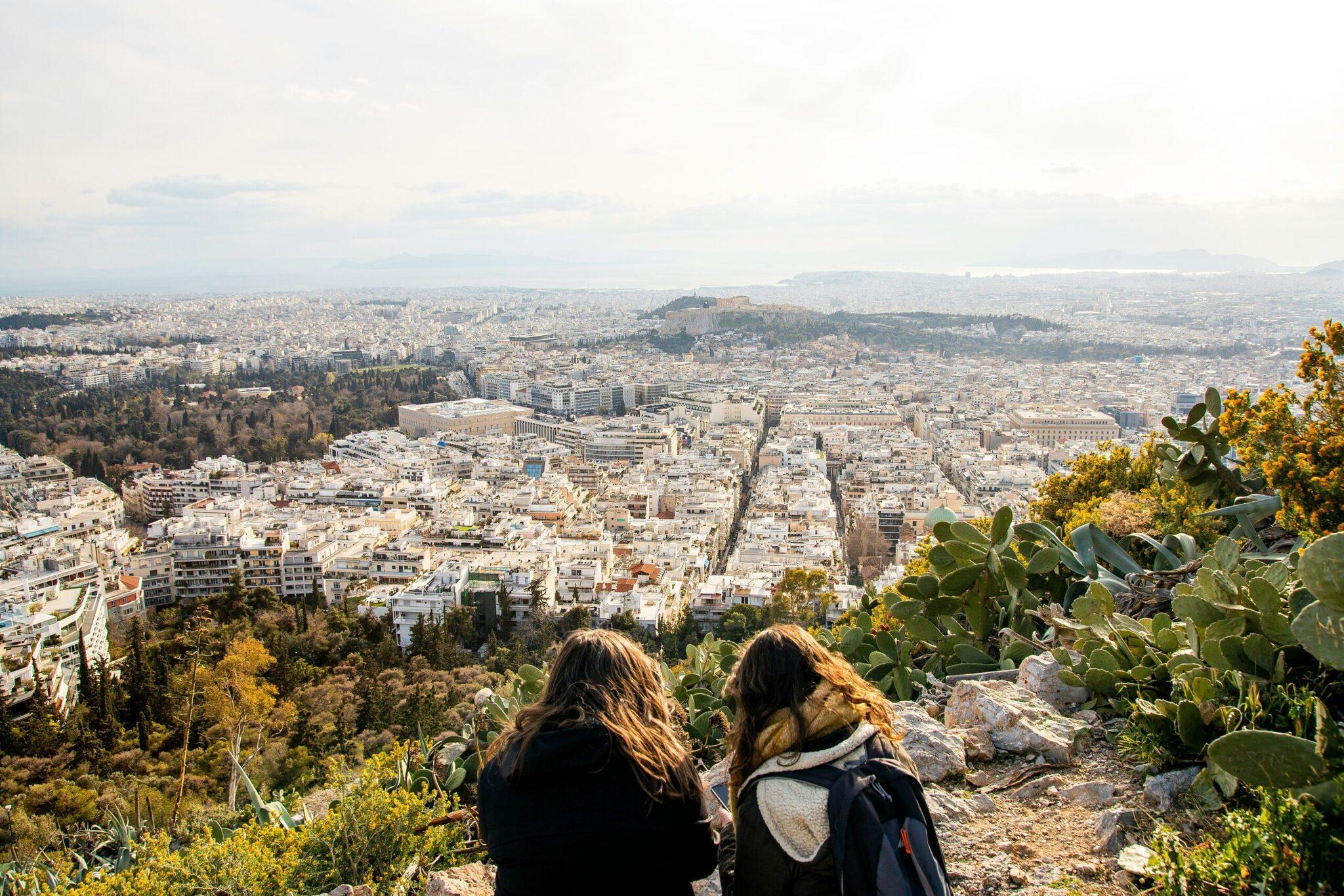
The best time to go: an hour before sunset, when the golden light strikes the Parthenon from above.
The Panathenaic Stadium: White Marble Built for the 1896 Olympics
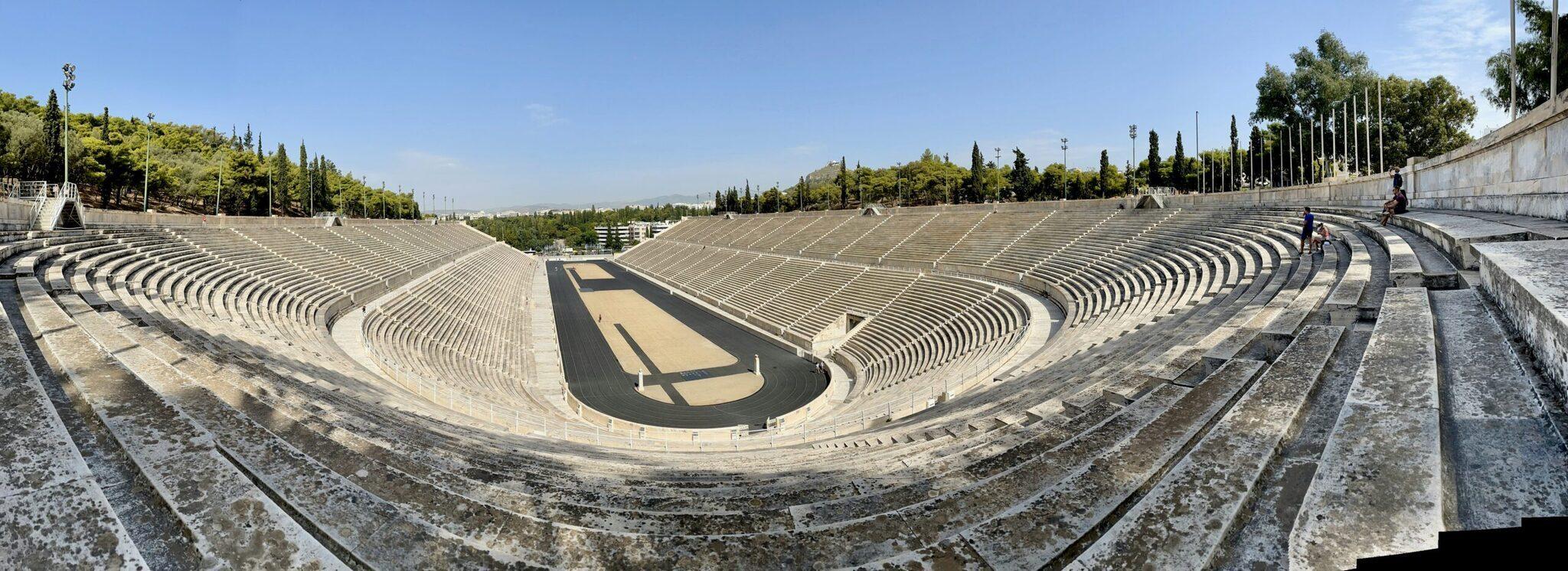
Built entirely from white marble, the Panathenaic Stadium (Kallimarmaro) is the only large stadium in the world made from this material. It hosted the first modern Olympic Games in 1896 and holds 50,000 spectators. Admission includes an audio guide available in several languages, as well as the chance to run a lap on the track.
The National Archaeological Museum: 5,000 Years of Greek Art
Greece’s largest museum brings together collections spanning five millennia, from prehistory to the late Roman period. Highlights include the bronze statue known as Poseidon or Zeus, the golden masks of Mycenae and the Thera frescoes. Allow at least half a day to take in the essentials.
The National Gardens: A Green Retreat in the Heart of the City
Laid out in the 19th century for Queen Amalia, these gardens cover 15.5 hectares at the heart of Athens, between the Parliament building and the Mets neighbourhood. Ponds, ancient ruins woven into the greenery and a small zoo make this the perfect shaded refuge between museums.

Eating in Athens: Mezze, Souvlaki and Loukoumades
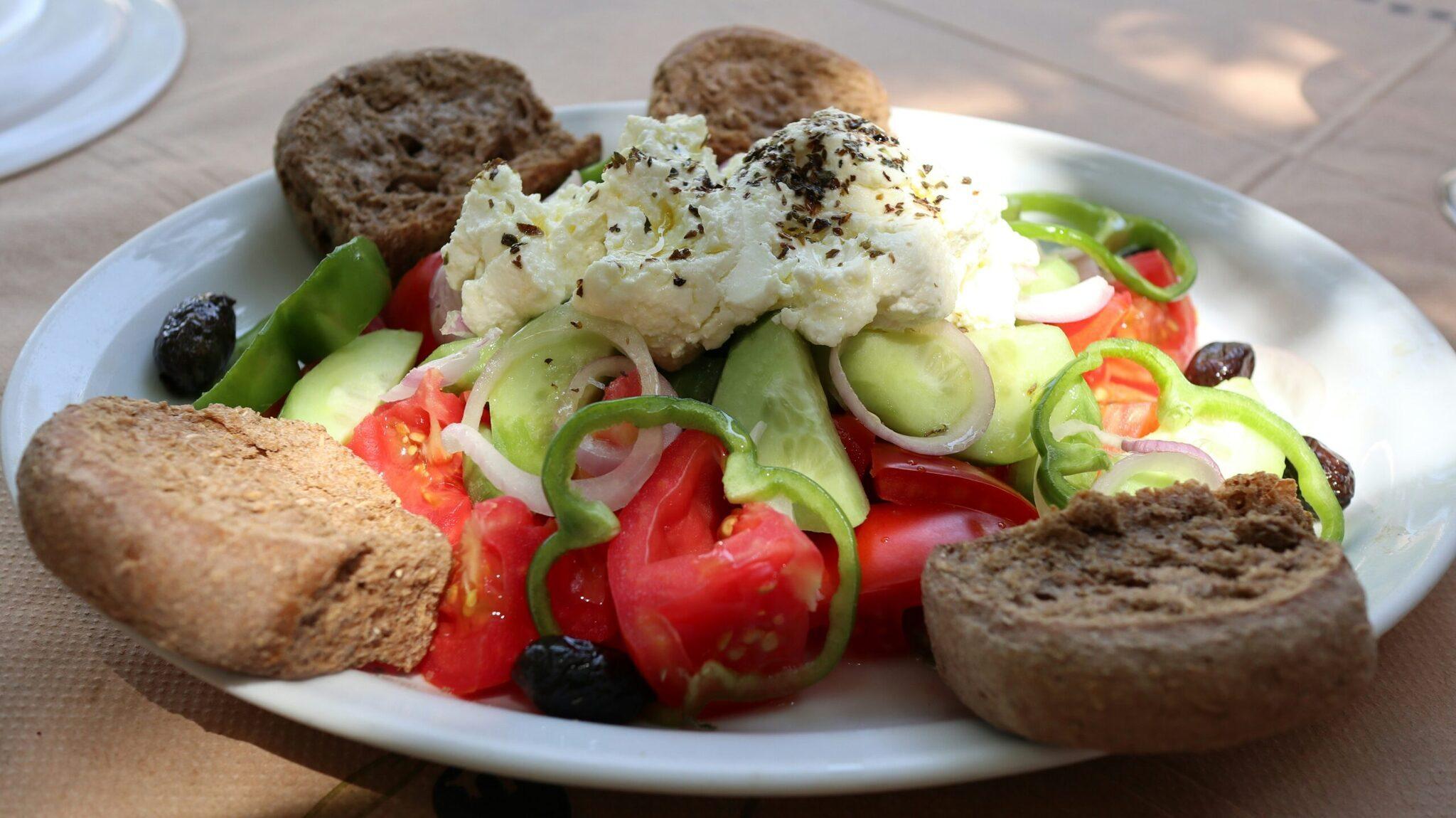
In a taverna, the done thing is to order several sharing plates: mezze, dolmades, tzatziki, tirokafteri, washed down with Greek wine or a glass of ouzo. In the streets of Monastiraki and Psiri, souvlaki is eaten standing up, straight from the grill. For something sweet, loukoumades (fried dough balls drizzled with honey and cinnamon) are Athens’ essential street food dessert.
Day Trip to Cape Sounion: The Temple of Poseidon Above the Aegean
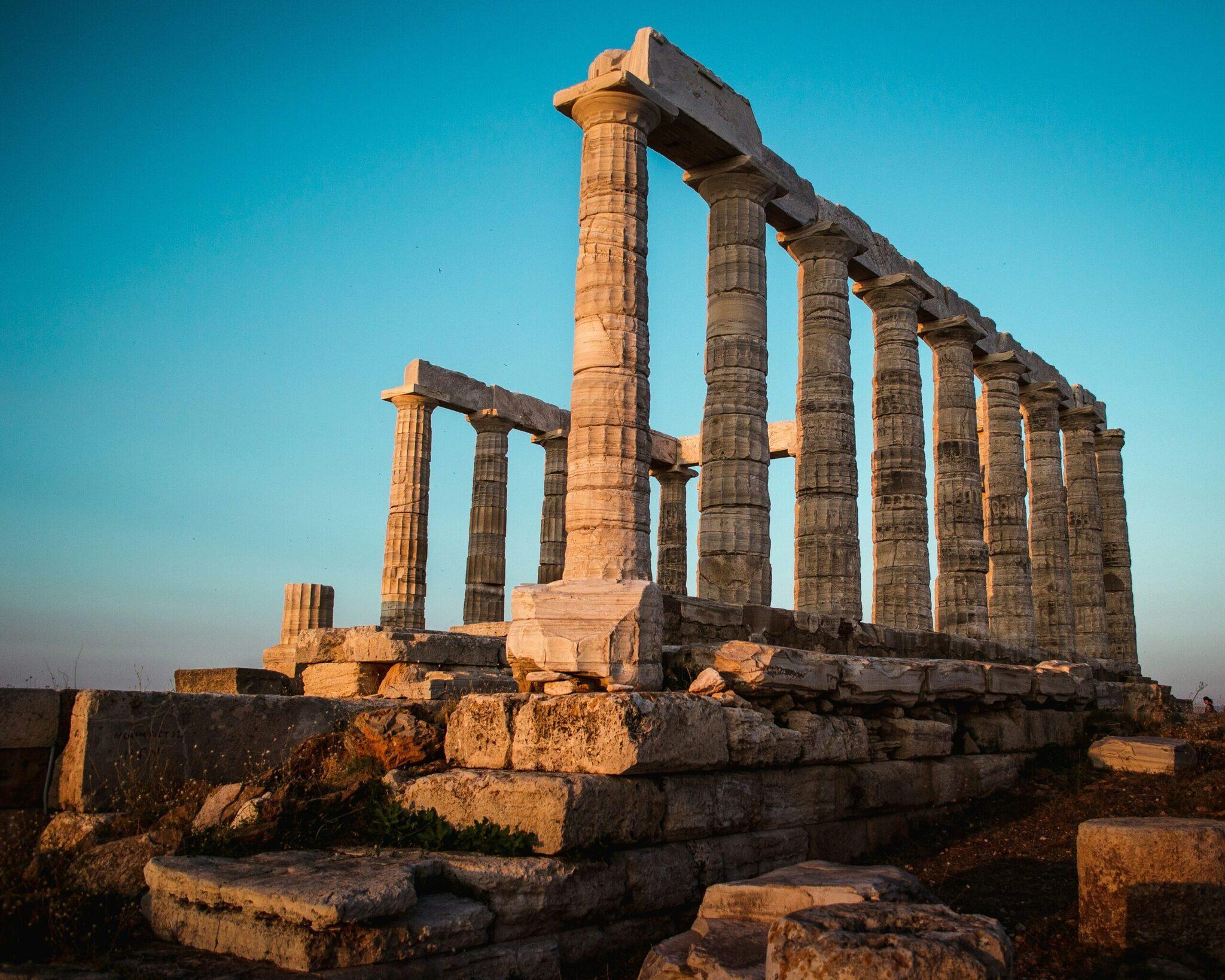
70 km south of Athens along the coastal road, Cape Sounion is a rocky headland that drops sheer into the Aegean Sea. The Temple of Poseidon, built around 444 BC, has commanded the sea from its still-standing Doric columns for twenty-five centuries. Head out in the late afternoon to watch the sun sink behind the columns over the water.
The site is open from 9am to 8pm between March and October, and 9am to 6pm from November to February. By public transport, the KTEL bus from Syntagma Square takes around 1 hour 30 minutes. Organised day trips from Athens combine a guided visit with the sunset on site.
Athens is just the starting point for discovering Greece: our guide Things to Do in Greece: 20 Must-See Experiences will help you plan an itinerary beyond the capital. If big cities inspire you, What to Do in Madrid? and What to Do in Singapore? are well worth a look too.
FAQ
How long do you need to visit Athens?
Two days are enough to see the Acropolis, the Acropolis Museum, Plaka, Monastiraki and the Panathenaic Stadium without feeling rushed. Three days leave room for the National Archaeological Museum, Lycabettus Hill and a day trip to Cape Sounion.
How much does an Acropolis ticket cost in 2025-2026?
Since 1 April 2025, the full-price ticket is €30. EU nationals under 25 enter free on presentation of a valid ID. Combined tickets give access to several Athens sites in a single purchase.
When is the best time to visit the Acropolis to avoid crowds and heat?
At opening time (8am) or in the late afternoon. At the height of summer, if temperatures exceed 40°C, access may be suspended between 1pm and 5pm.
How do you get to Cape Sounion from Athens?
By KTEL bus from Syntagma Square: the journey takes around 1 hour 30 minutes. Organised day trips from the city also combine a guided visit with the sunset at the temple.
Do you need travel insurance for Greece?
The European Health Insurance Card covers urgent treatment at public hospitals, but not medical repatriation or private clinics, which are often where tourists end up. Supplementary travel insurance covers both.