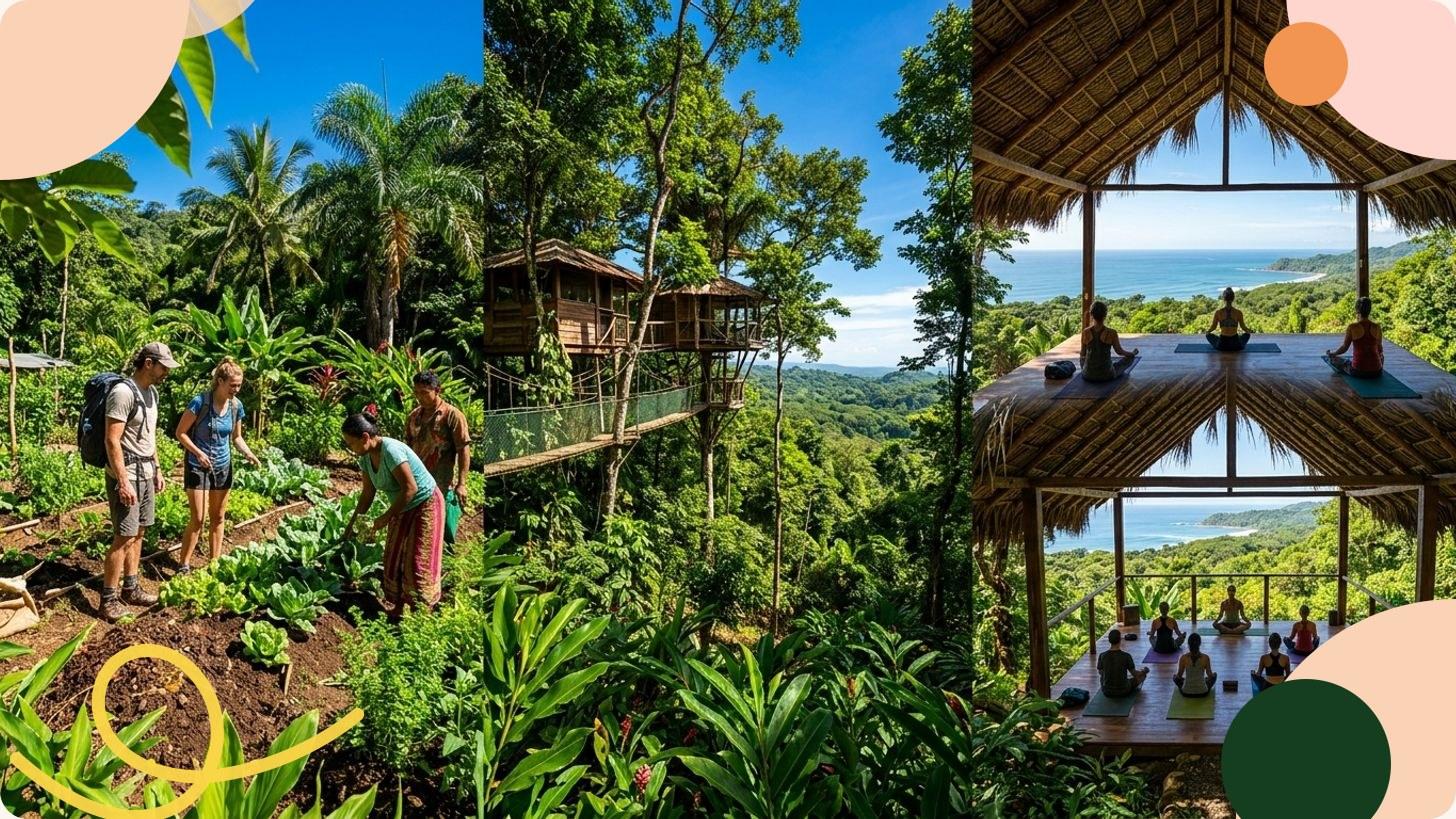

Rancho Mastatal, Finca Bellavista and Pachamama represent three radically different takes on eco-village life in Costa Rica: learning by doing (permaculture and natural building), sleeping high in the tropical forest canopy, or slowing down for a yoga and meditation retreat. All three communities welcome short-stay visitors as well as longer-term guests, set within some of Central America’s best-preserved landscapes.
Plan my trip and choose my travel insuranceRancho Mastatal: a permaculture school in the heart of the forest
Founded in 2001 in the farming village of Mastatal, in Puriscal County, Rancho Mastatal is at once an active permaculture farm, a sustainability education centre and an eco-lodge. The property covers more than 300 acres of private wildlife reserve, with waterfalls, rivers, natural swimming holes and over 10 km of hiking trails. More than 200 acres of previously cleared land have been regenerated into secondary forest, creating valuable habitat for local wildlife.
What you actually learn there
The ranch offers certified permaculture design courses (intensive two-week programmes), one-year residential apprenticeships selected by application, and workshops in natural building using earth, bamboo and locally sourced timber. Topics also cover agroforestry, fermentation, wilderness medicine and tropical homesteading techniques. All infrastructure on the ranch prioritises natural materials.
Life here is genuinely communal: residents and visitors eat, play and work together every day, sharing resources and responsibilities.
Who is it for?
Rancho Mastatal suits those who want to learn, not just look. Day visitors and short-stay guests can book a room in the eco-lodge and take part in ranch life. The drive from San José takes around two hours along a mountain road: come prepared with a suitable vehicle.
Finca Bellavista: sleeping in the canopy, off the grid
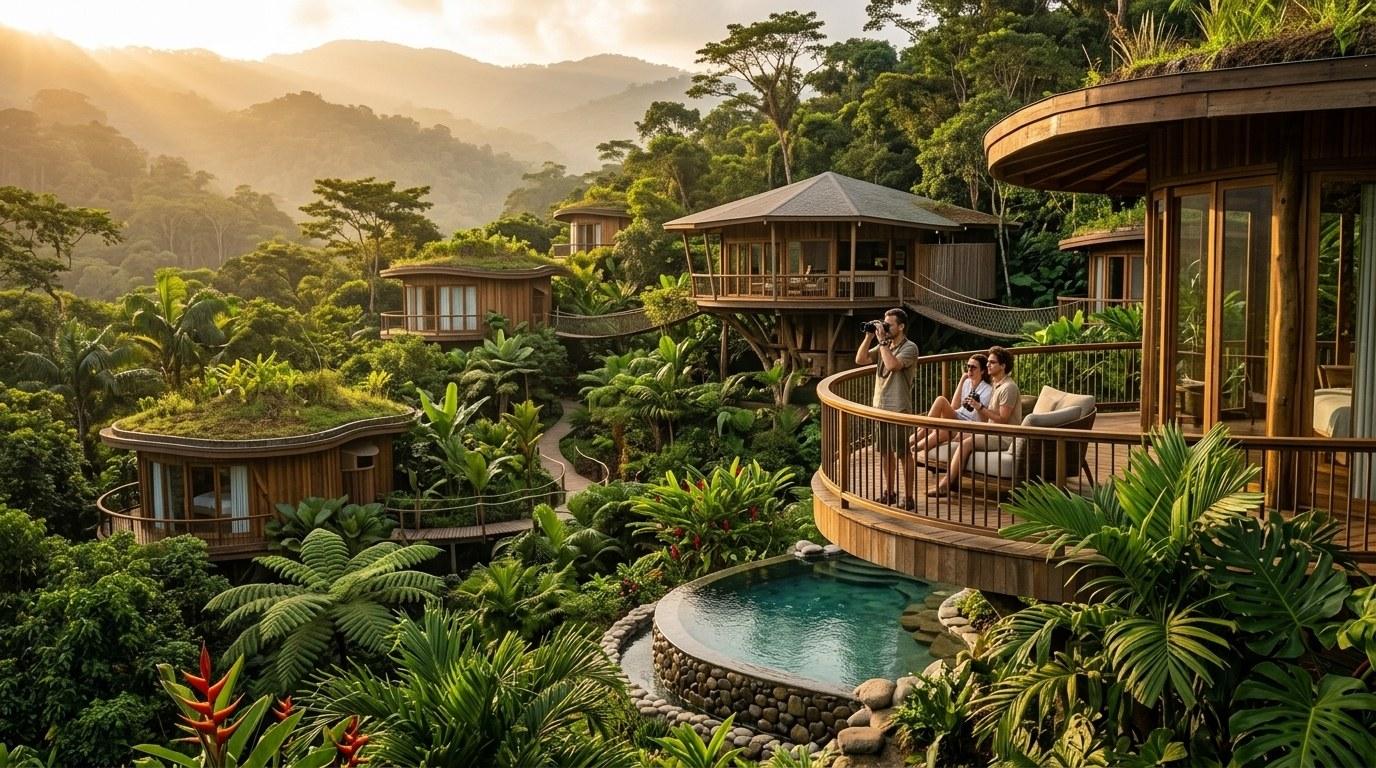
Founded in 2006 by Mateo and Erica Hogan, Finca Bellavista bills itself as the world’s first treehouse village. The property spans nearly 600 acres of primary and secondary forest on the Southern Pacific coast, with views over the Golfo Dulce. All energy on site comes from renewable sources (solar and hydroelectric): the community lives entirely off-grid.
Life suspended among the trees
The dwellings are built on stilts or directly in the trees to allow wildlife to move freely along the forest floor. Residents and visitors travel between treehouses by zip line or on foot along forest paths. Activities on offer include yoga classes, electric bike tours and birdwatching excursions through the forest.
Who is it for?
Finca Bellavista draws both curious travellers looking for a unique stay of a few nights and buyers who want to build their own home within the community. A 4x4 is recommended to reach the site, as the forest track can become impassable during the rainy season.
If Costa Rica has caught your imagination beyond eco-villages, browse our pick of the 20 must-do things in Costa Rica to build your itinerary.
Pachamama: retreat and transformation on the Nicoya Peninsula
Founded in December 1999 by Tyohar and fellow travellers, Pachamama is based in San Juanillo on the Pacific coast of the Nicoya Peninsula (Guanacaste). The community has reforested 500 acres of former cattle-farming land: birds and wildlife have gradually returned. The village now has 90 residences and welcomes both permanent residents and hundreds of visitors each year.
Six pillars, one way of life
Pachamama organises daily life around six core areas: meditation, emotional healing, yoga and physical rejuvenation, ancestral ceremonies, ecology and musical journeys. Silent retreats, 200-hour Yoga Alliance-certified teacher training and emotional healing workshops are among the most sought-after programmes. The community currently produces 25% of its food locally, with a long-term target of 90%.
Who is it for?
Pachamama appeals more to travellers drawn to personal transformation and intentional community living than to pure nature tourism. Taking time to read through their programme before booking helps ensure the spirit of the place matches what you are looking for.
Those attracted by wellbeing in an extraordinary natural setting might also look at what a wellness retreat in Indonesia has to offer, another destination that blends jungle, spirituality and high-quality retreats.
Which eco-village suits your trip?
| Rancho Mastatal | Finca Bellavista | Pachamama | |
|---|---|---|---|
| Ideal profile | Learn and practise | Immerse yourself in the canopy | Transform from within |
| Highlight | Permaculture and natural building | World’s first off-grid treehouse village | Certified yoga, meditation, community living |
| Access | Mountain road, approx. 2 hrs from San José | Southern Pacific (Golfo Dulce), 4x4 recommended | Nicoya Peninsula, San Juanillo |
| Founded | 2001 | 2006 | 1999 |
Before you go: the practicalities
All three sites are in remote areas, often accessible only by dirt track, with direct exposure to tropical wildlife. The nearest medical facilities can be several hours away by road: appropriate medical cover is not a luxury in these kinds of environments.
For everything you need to check before departure (visas, recommended vaccinations, currency, health), see our complete guide to travel insurance for Costa Rica, which brings together all the key information.
FAQ
What is an eco-village in Costa Rica?
An eco-village is an intentional community that organises daily life around environmental sustainability, self-sufficiency and social connection. In Costa Rica, these communities often draw on permaculture principles, renewable energy and locally grown food. Some, such as Finca Bellavista and Pachamama, also welcome outside visitors for stays ranging from a few nights to several months.
When is the best time to visit an eco-village in Costa Rica?
The dry season (December to April) makes access to remote sites much easier and keeps tracks passable. During the rainy season (May to November), forest roads can become difficult without a 4x4 and some programmes may be suspended. All three eco-villages operate year-round, but their training calendars vary: check their official websites to confirm dates.
Can you visit Finca Bellavista without being a permanent resident?
Yes. Finca Bellavista welcomes short-stay visitors who can rent a treehouse cabin or home. The community also includes property owners who have had their own dwelling built on site, but no property investment is required to stay there.
Is Rancho Mastatal suitable for permaculture beginners?
Yes. The courses are designed for all levels. The two-week permaculture design certification combines theory and hands-on practice on the farm. Shorter visits are also possible for those who want to experience the ranch without committing to a full programme.
Do I need travel insurance to stay at these eco-villages?
In such isolated environments, insurance covering medical expenses and repatriation is strongly recommended. An incident (a fall, an animal bite, illness) in a remote area can require a costly evacuation. Yupwego covers medical expenses and repatriation under your policy. See the Yupwego FAQ for full details of what is covered.